
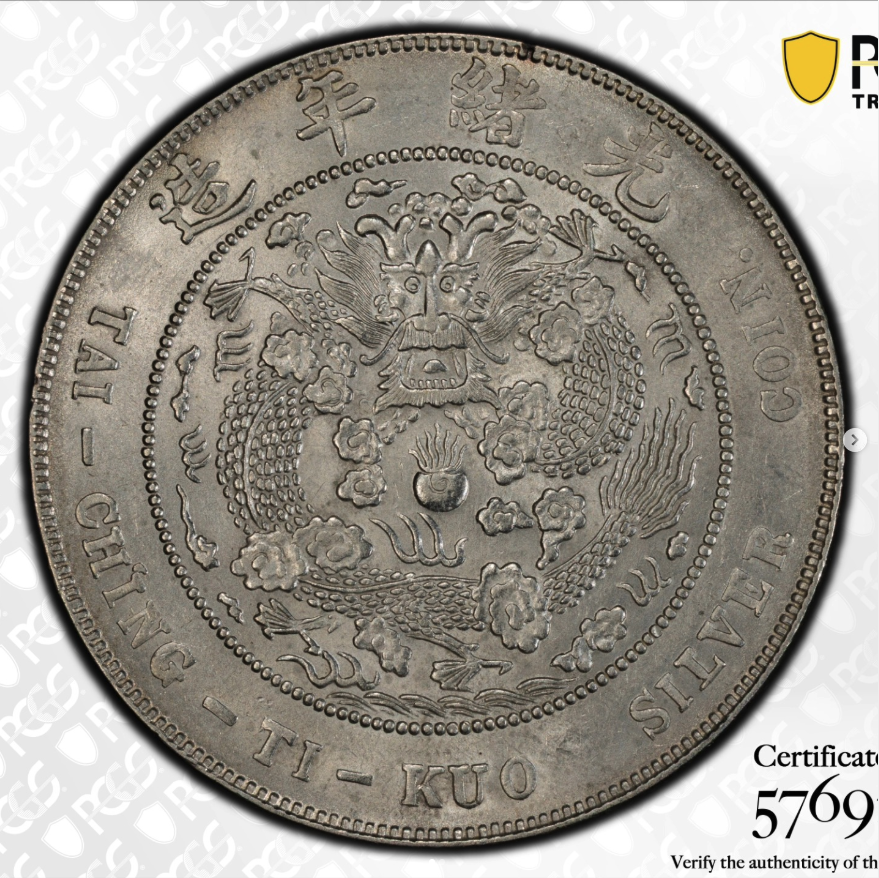
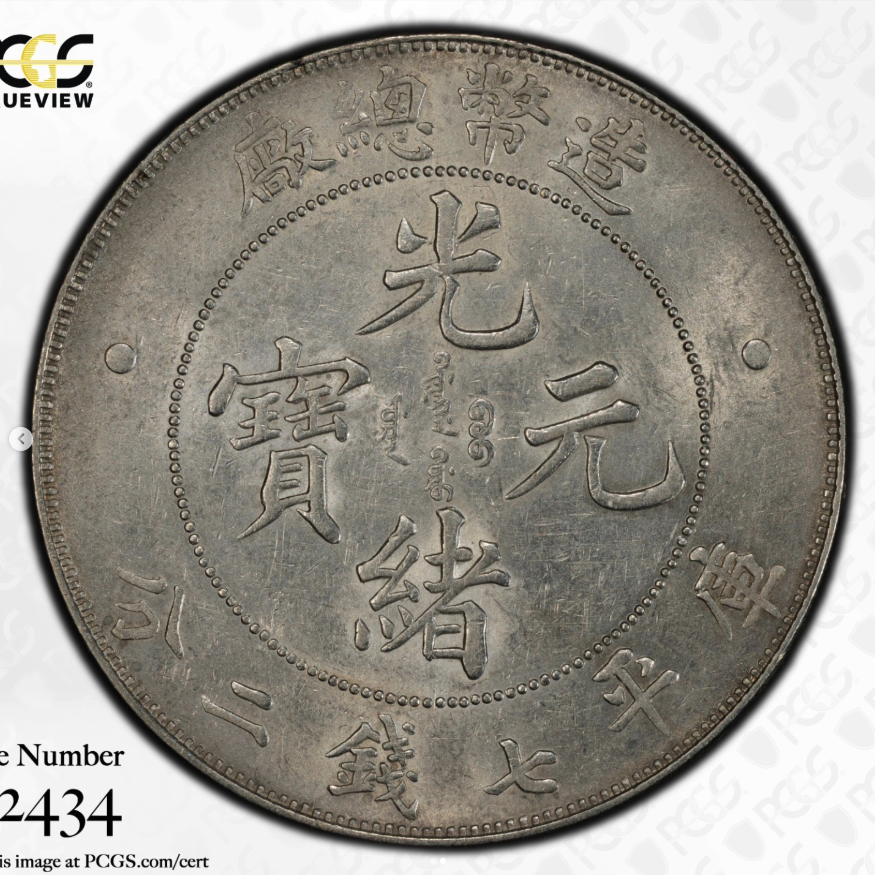
1908 Dollar (7 Mace 2 Candareens)
Final pattern dollar of the Guangxu reign - the iconic "Parade" Dragon design, struck at the Tientsin Central Mint.
- Metal
- Silver
- Mint
- Tientsin Central Mint
- Grade
- PCGS AU-55 · Freshly Graded
Full attribution & era
The history behind the coin.
Issued in the closing year of the Guangxu Emperor's reign, the 1908 "Tai-Ching-Ti-Kuo Silver Coin" represents the late Qing dynasty's effort to unify a fragmented provincial coinage system under a single national standard. After decades of competing dragon dollars produced by individual provincial mints, the imperial government in Beijing pushed for a centralized issue struck at the Tientsin Central Mint.
The reverse - known to collectors as the "Parade" Dragon - is one of the most striking dragon designs in the Chinese silver series, with bold relief, deeply curling clouds, and the legend "TAI-CHING-TI-KUO SILVER COIN" in English running around the periphery. The obverse carries the four central characters "Guangxu Yuanbao" ("Currency of Guangxu") with the denomination "Ku Ping 7 Mace 2 Candareens" - the traditional silver tael weight standard - and the mint mark of the Tientsin Central Mint above.
Guangxu died in November 1908, only months after this issue, and the Qing dynasty itself collapsed three years later in the Xinhai Revolution of 1911. As a result, this design represents both the apex of imperial Chinese silver coinage and one of its final imperial issues. Freshly graded PCGS AU-55 - exceptional eye appeal for a coin that survived the fall of an empire and over a century of circulation.
- Kann, Eduard - Illustrated Catalog of Chinese Coins (Kann-216).
- L&M Reference - Silver Coins of China (LM-11).
- PCGS Cert lookup - PCGS.com/cert.