
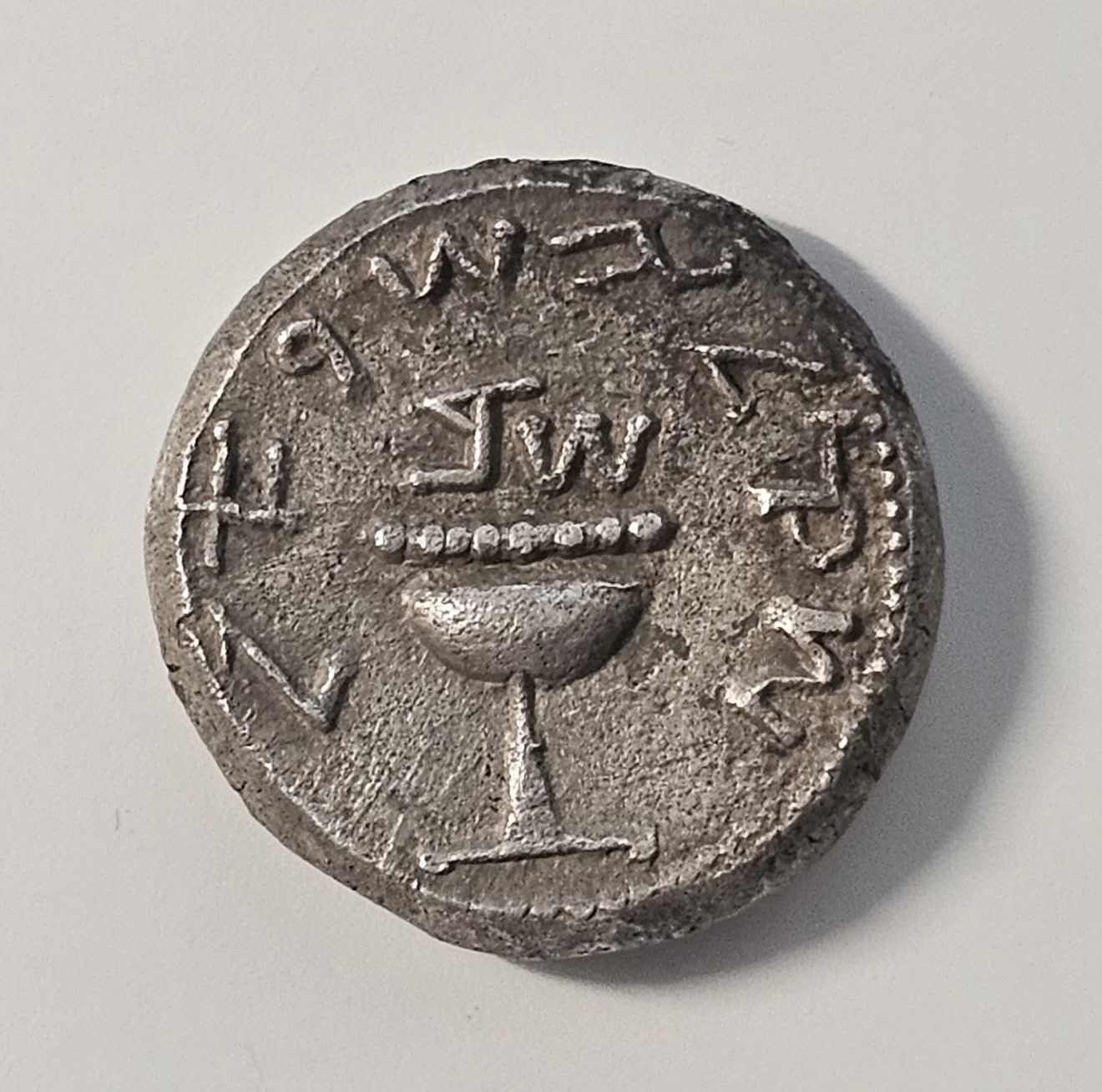
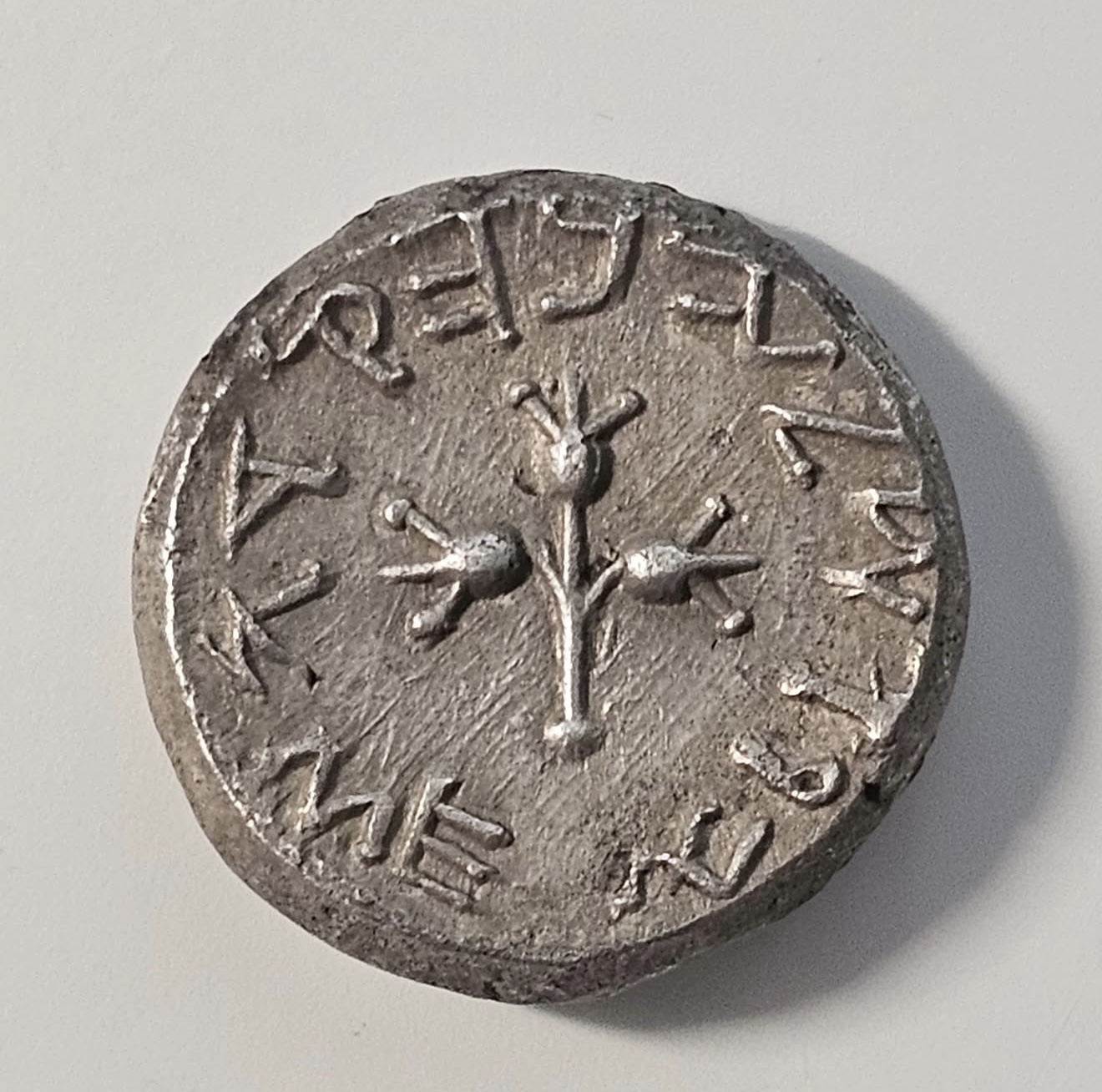
AD 67–68 AR Shekel (Year 3)
Struck by Judean rebels during the war that ended in the destruction of the Second Temple - chalice obverse, three pomegranates reverse.
- Metal
- Silver
Full attribution & era
The history behind the coin.
The 1st Jewish War was a major rebellion by Judean rebels against the Roman Empire, fueled by religious tension, excessive taxation, and anti-Roman sentiment. It culminated in the devastating Roman siege of Jerusalem, which saw the destruction of the Second Temple in 70 A.D., and the final fall of Masada in 73 A.D.
These silver shekels were struck inside Jerusalem during the revolt and were used to pay the half-shekel Temple tax - a deliberate act of sovereignty against Rome, since they bear no emperor's portrait and use the old Paleo-Hebrew script rather than Greek or Latin.
The obverse shows a chalice (often interpreted as the Temple omer cup) with the inscription "Shekel of Israel" and the year of the revolt above. The reverse depicts a stem with three pomegranates - a symbol of the Temple - surrounded by "Jerusalem the Holy."
Year 3 shekels like this were struck in the year leading up to the siege. Examples in NGC AU with a full Strike 5/5 are genuinely rare; survivors of this caliber are how the Hall of Fame is built.
- Hendin, D. - Guide to Biblical Coins, 6th ed.
- Josephus, The Jewish War, Books V–VI - Siege of Jerusalem.