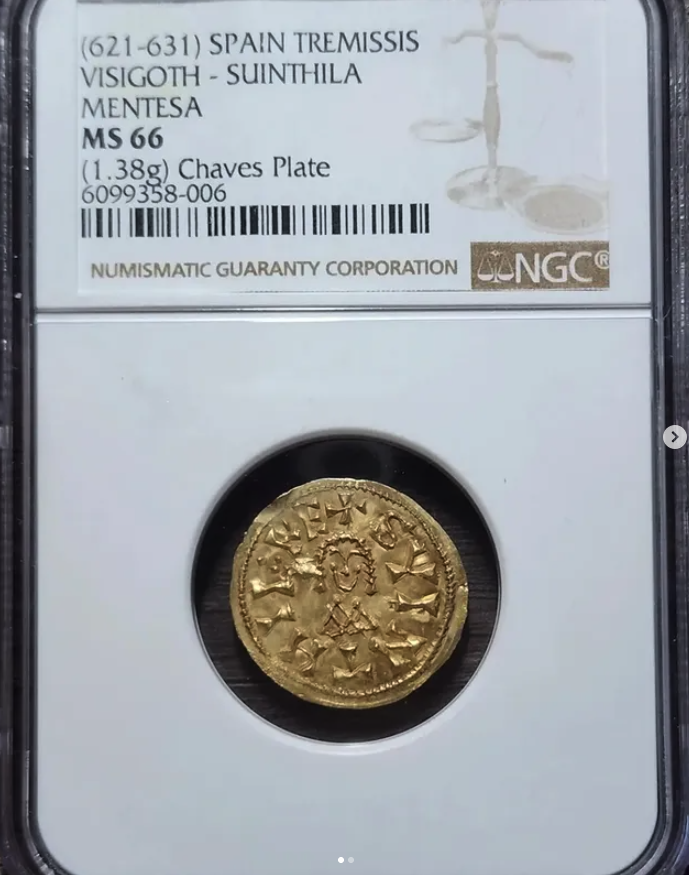
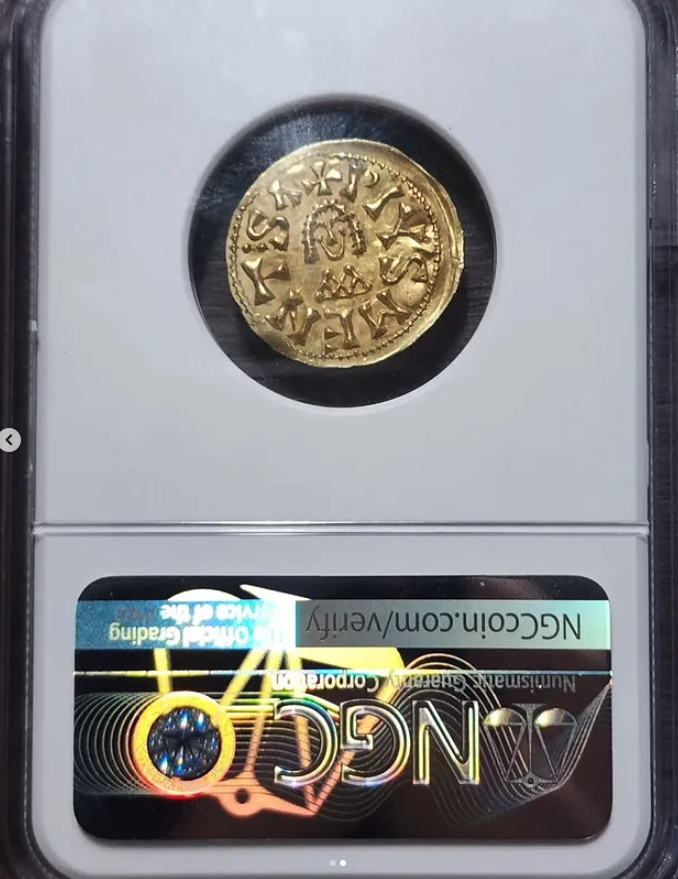
AD 621-631 AV Tremissis (1.38g)
A spectacular gold tremissis of the Visigothic king Suinthila from the rare Mentesa mint - graded NGC MS 66 and published as the plate coin in the Chaves reference. The kind of survival that simply does not happen.
- Metal
- Gold
- Mint
- Mentesa
- Grade
- NGC MS 66
- Cert #
- 6099358-006
- Pedigree
- Chaves Plate Coin (Ruth Pliego Vázquez / Chaves reference)
Full attribution & era
The history behind the coin.
By the early 7th century AD, the old Roman provinces of Hispania had been ruled for two centuries by the Visigoths - a Germanic kingdom that, after the collapse of the Western Roman Empire, retained the Roman gold coinage tradition and adapted it for its own use. The Visigothic kings issued a steady, beautifully stylized series of gold tremisses (one third of a solidus) from a network of mints scattered across the Iberian Peninsula, naming both the king and the city of issue on the coin itself - one of the most explicit mint-signature systems of the entire early-medieval West.
Suinthila (r. 621-631) was one of the most successful Visigothic kings. He completed the expulsion of the Eastern Roman (Byzantine) garrisons from southern Spain, finally unifying the entire peninsula under a single Visigothic crown for the first time, and he is the king Isidore of Seville celebrated in his Historia Gothorum. His tremisses are correspondingly historically significant - and the issues from smaller secondary mints like Mentesa (in Andalusian Hispania) are decidedly rare.
The obverse and reverse both carry the highly stylized facing bust of the king with his name and the mint-name in degraded Latin capitals: +PIVS SVINTHILA on one side and +MENTESA PIVS on the other, surrounding the schematic crowned head that defines Visigothic royal portraiture. The fabric is full and round, the strike is centered, and the gold has the warm, unworn surfaces of a coin that essentially never circulated.
NGC MS 66 on a 7th-century gold coin is the kind of grade that simply does not happen for early-medieval European issues - tremisses of this period are usually known clipped, bent, scuffed, or wearing the marks of 1,400 years of handling. This piece is also the published Chaves plate coin (referenced through Ruth Pliego Vázquez and the standard Chaves corpus of Visigothic coinage), giving it both pedigree and academic citation. Sometimes you get a coin that makes you go God Damn. This is one of those times.
- Pliego Vázquez, Ruth - La Moneda Visigoda (standard reference for the Visigothic series).
- Miles - The Coinage of the Visigoths of Spain: Leovigild to Achila II.
- Chaves - cited as the published plate coin for this Suinthila / Mentesa issue.
- NGC Ancients Cert #6099358-006.